



Histamine Receptor
Histamine Receptors are a class of G protein-coupled receptors with histamine as their endogenous ligand. There are four known histamine receptors: H1 receptor, H2 receptor, H3 receptor, H4 receptor. The H1 receptor is a histamine receptor belonging to the family of Rhodopsin-like G-protein-coupled receptors. This receptor, which is activated by the biogenic amine histamine, is expressed throughout the body, to be specific, in smooth muscles, on vascular endothelial cells, in the heart, and in the central nervous system. H2 receptors are positively coupled to adenylate cyclase via Gs. It is a potent stimulant of cAMP production, which leads to activation of Protein Kinase A. Histamine H3 receptors are expressed in the central nervous system and to a lesser extent the peripheral nervous system, where they act asautoreceptors in presynaptic histaminergic neurons, and also control histamine turnover by feedback inhibition of histamine synthesis and release. The Histamine H4 receptor has been shown to be involved in mediating eosinophil shape change and mast cell chemotaxis.
Histamine Receptor Isoform Specific Products
All Product Categories
-
Histamine Receptor Inhibitors
(197)
View all products
-
Histamine Receptor Agonists
(66)
View all products
-
Histamine Receptor Antagonists
(495)
View all products
-
Histamine Receptor Activators
(5)
View all products
-
Histamine Receptor Modulators
(20)
View all products
-
Histamine Receptor Controls
(9)
View all products
-
Histamine Receptor Ligands
(2)
View all products
-
Histamine Receptor Related Products (860)
Related Products (860)

-
Antibodies (2)
-
Histamine Receptor Isoform Comparison
-
Alcaftadine carboxylic acid-d3 sodium
 0 ImagesCat. No.: HY-124356ASAlcaftadine carboxylic acid-d3 (sodium) is deuterium labeled Alcaftadine carboxylic acid. Alcaftadine carboxylic acid is a broad-spectrum antihistamine compound with high affinity for histamine H1 and H2 receptors and low affinity for H4 receptors. Alcaftadine carboxylic acid has also demonstrated effects on modulating immune cell recruitment and stabilizing mast cells. Alcaftadine carboxylic acid is more effective than placebo in preventing ocular itching associated with allergic conjunctivitis and is at least as effective as olopatadine 0.01%.
-
Chlorpheniramine (Standard)
 0 ImagesChlorpheniramine (Standard) is the analytical standard of Chlorpheniramine. This product is intended for research and analytical applications. Chlorpheniramine is a H1 antihistamines commonly used in allergic diseases research.
-
UCL-1972
 0 ImagesCat. No.: HY-124389CAS No.: 220728-17-6UCL-1972 is an antagonist of Histamine H3 receptor. UCL-1972 can be studied in research on cognitive diseases.
-
Acrivastine-d7
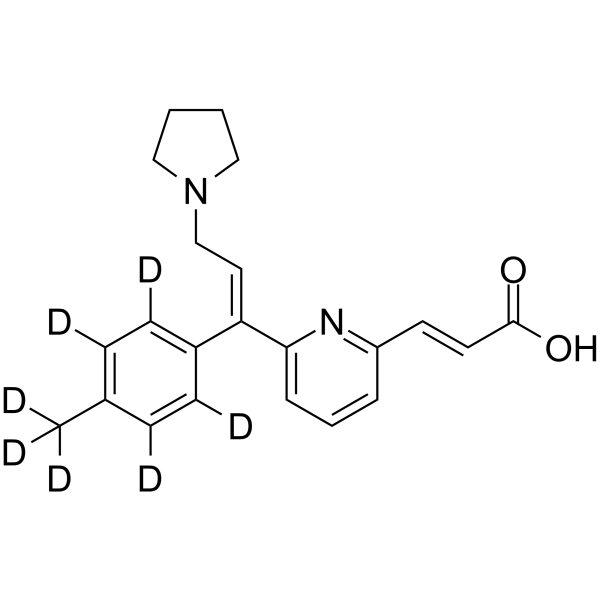 0 ImagesCat. No.: HY-B1510SCAS No.: 172165-56-9Synonyms: BW825C d7Acrivastine-d7 is a deuterium labeled Acrivastine. Acrivastine is a short acting histamine 1 receptor antagonist.
-
Azelastine-d3
 0 ImagesCat. No.: HY-W744206CAS No.: 758637-88-6Azelastine-d3 is the deuterium labeled Azelastine (HY-B0462A). Azelastine, an antihistamine, is a potent and selective histamine 1 (H1) antagonist. Azelastine can be used for the research of allergic rhinitis, asthma, diabetic hyperlipidemic and SARS-CoV-2.
-
Thonzylamine hydrochloride
 0 ImagesThonzylamine hydrochloride is an orally active H1 histamine receptor antagonist with good antihistaminic and antianaphylactic properties. Thonzylamine hydrochloride can be used for the research of hypersensitivity diseases, nasal congestion, allergic conjunctivitis and other allergic diseases.
-
R 58639
 0 ImagesCat. No.: HY-178727CAS No.: 99157-83-2R 58639 is a histamine H1 receptor antagonist. R 58639 can be used for the study of gastric ulcers.
-
A-331440
 0 ImagesCat. No.: HY-12191CAS No.: 392338-13-5A-331440 is a potent and selective histamine H3 receptor antagonist that regulates neurotransmitter release by inhibiting presynaptic H3 receptors. In preclinical studies involving mice on a high-fat diet, A-331440 demonstrated dose-dependent effects on weight reduction and fat loss. At 5 mg/kg, it effectively decreased body weight comparable to dexfenfluramine, while at 15 mg/kg, it significantly reduced body fat and improved insulin tolerance, similar to mice on a low-fat diet. These findings suggest that A-331440 holds promise as an antiobesity agent by modulating histaminergic pathways involved in food intake and metabolic regulation.
-
Wy 45086
 0 ImagesCat. No.: HY-182431CAS No.: 87476-50-4Wy 45086 is a histamine H2 receptor antagonist. Wy 45086 blocks the H2 receptor signaling pathway and inhibits gastric acid secretion in experimental animals. Wy 45086 can be used in ulcer-related research.
-
ROS 234
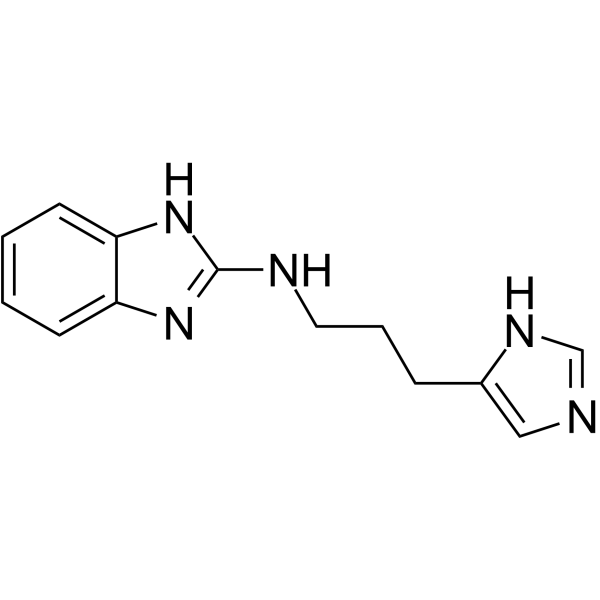 0 ImagesCat. No.: HY-107563CAS No.: 184576-87-2ROS 234 is a potent H3 antagonist, with a pKB of 9.46 for Guinea-pig ileum H3-receptor, a pKi of 8.90 for Rat cerebral cortex H3-receptor, and a ED50 of 19.12 mg/kg (ip) in ex vivo of Rat cerebral cortex. ROS 234 diaplays poor central access.
-
Sequifenadine
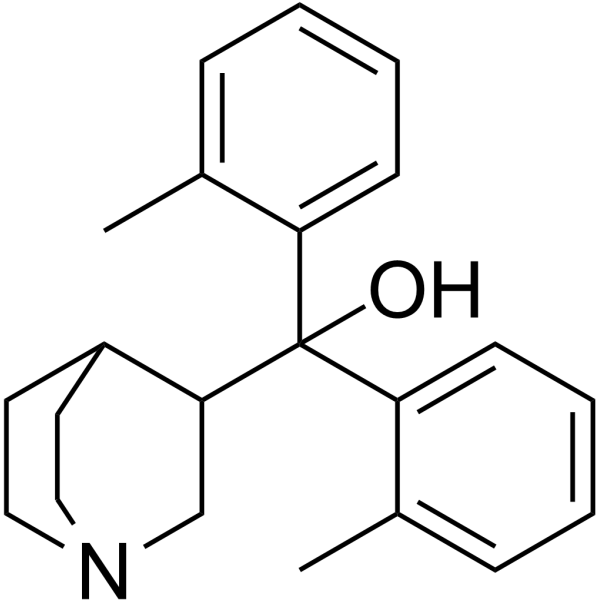 0 ImagesCat. No.: HY-W281862CAS No.: 57734-69-7Sequifenadine is a H1-antihistamine. Sequifenadine has the potential for the research of inflammatory eye disease with allergic symptoms.
-
AChE-IN-14
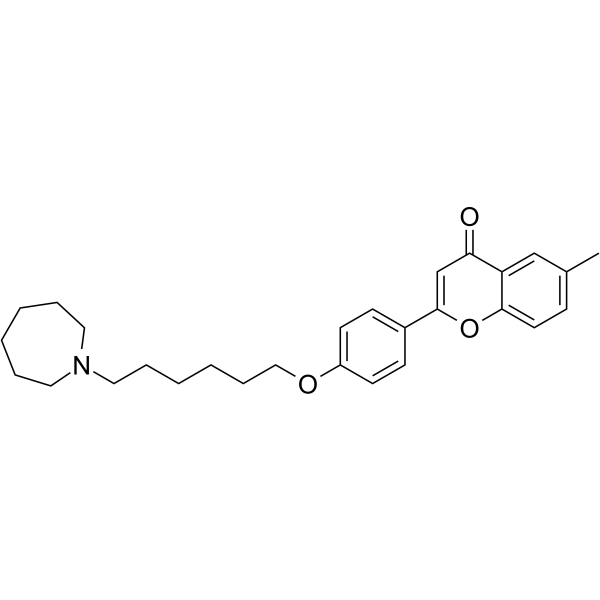 0 ImagesCat. No.: HY-146035CAS No.: 2390042-05-2AChE-IN-14 (compound 5) is a potent cholinesterase inhibitor with IC50s of 0.46 , 0.48, and 0.44 μM for electric eel acetylcholinesterase (eeAChE), human recombinant acetylcholinesterase (hAChE), and equine serum butyrylcholinesterase (eqBuChE), respectively. AChE-IN-14 exhibits high affinity toward human H3 receptor (H3R; Ki= 159.8 nM). AChE-IN-14 can be used for the research of Alzheimer’s disease.
-
Azacyclonol (Standard)
 0 ImagesAzacyclonol (Standard) is the analytical standard of Azacyclonol. This product is intended for research and analytical applications. Azacyclonol (γ-pipradol), a metabolite of Terfenadine, is a central depressant agent. Azacyclonol is a ganglion-blocking agent. Azacyclonol can be used to diminish psychoses-induced hallucinations.
-
Cetirizine-d4 dihydrochloride
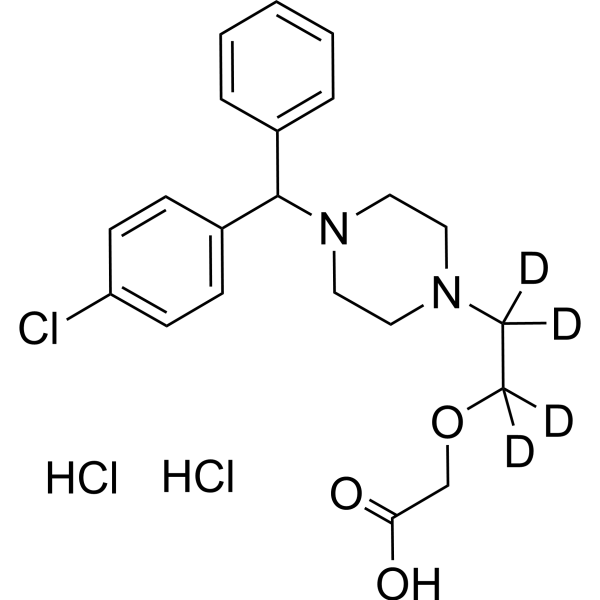 0 ImagesCat. No.: HY-17042ASCetirizine-d4 (dihydrochloride) is a deuterium labeled Cetirizine. Cetirizine, a second-generation antihistamine and the carboxylated metabolite of hydroxyzine, is a specific, orally active and long-acting histamine H1-receptor antagonist. Cetirizine marks antiallergic properties and inhibits eosinophil chemotaxis during the allergic response.
-
ROS 234 dioxalate
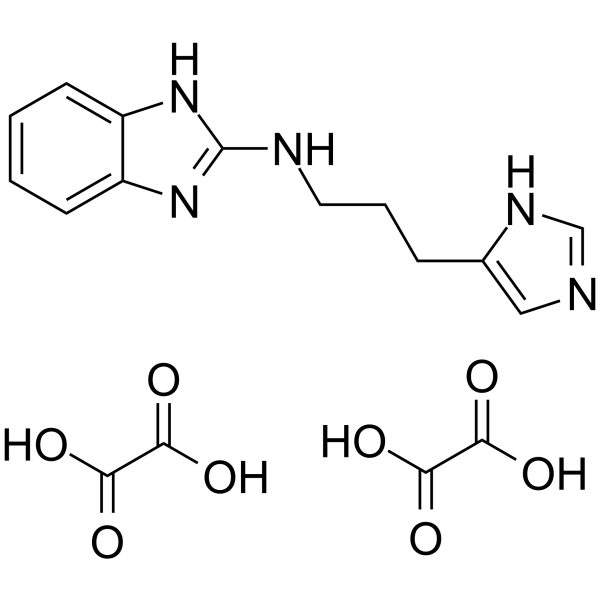 0 ImagesCat. No.: HY-107563ACAS No.: 1781941-93-2ROS 234 dioxalate is a potent H3 antagonist, with a pKB of 9.46 for Guinea-pig ileum H3-receptor, a pKi of 8.90 for Rat cerebral cortex H3-receptor, and a ED50 of 19.12 mg/kg (ip) in ex vivo of Rat cerebral cortex. ROS 234 dioxalate diaplays poor central access.
-
Betazole hydrochloride
 0 ImagesBetazole hydrochloride (Ametazole hydrochloride), a pyrazole analogue of histamine, is an orally active histamine H2 receptor agonist. Betazole induces gastric acid secretion and causes an immediate and significant increase in common bile duct pressure. Betazole is used as a diagnostic agent known as histalog for investigating gastric acid secretory capacity.
-
H3R antagonist 1
 0 ImagesH3R antagonist 1 is a histamine receptor 3 (H3R) inverse agonist. H3R antagonist 1 increases the expression levels of myelin-associated glycoprotein (MAG) and myeline basic protein (MBP) in differentiating oligodendrocytes. H3R antagonist 1 can be used for the study of multiple sclerosis.
-
Chlorphenoxamine hydrochloride
 0 ImagesChlorphenoxamine hydrochloride, an antihistamine and anticholinergic agent is a GPCR antagonist. Chlorphenoxamine hydrochloride inhibits multiple lethal viral diseases, such as SARS-CoV, MERS-CoV, EBOV and malaria. Chlorphenoxamine hydrochloride shows anti-filovirus activity against both EBOV and Marburg virus (MARV) with IC50s of 1.1 μM and 6.2 μM, respectively. Chlorphenoxamine hydrochloride is used for allergic conditions, urticaria, viral diseases and Parkinson’s disease.
-
Dimethothiazine mesylate
 0 ImagesCat. No.: HY-A0157ACAS No.: 13115-40-7Synonyms: Dimetotiazine mesylate; Fonazine mesylateDimethothiazine mesylate is an orally active tricyclic anti-histamine, anti-5-HT agent with a high activity against decerebrate rigidity, a little sedative activity and little soporific action. Dimethothiazine mesylate can reduce or abolish the effects of both static and dynamic fusimotor activity on the muscle spindle in decerebrate cat. Dimethothiazine mesylate can be used to research hemicrania and spasticity.
-
Aplysamine-1
 0 ImagesCat. No.: HY-117500CAS No.: 159026-30-9Aplysamine-1 acts as an antagonist for the histamine H3 receptor.




